Montag, 17. Januar 2011

CO2 sequestration is leaky / Sprudelwasserquellen über CO2-Verpressung

"[...] released a consultant's report Tuesday that links high concentrations of carbon dioxide in their soil to 6,000 tonnes of the gas injected underground every day by energy giant Cenovus (TSX:CVE) in an attempt to enhance oil recovery and fight climate change.[...]Paul Lafleur of Petro-Find Geochem found carbon dioxide concentrations in the soil last summer that averaged about 23,000 parts per million — several times those typically found in field soils. Concentrations peaked at 110,607 parts per million.Lafleur also used the mix of carbon isotopes he found in the gas to trace its source.'The ... source of the high concentrations of CO2 in the soils of the Kerr property is clearly the anthropogenic CO2 injected into the Weyburn reservoir,' he wrote." (via winnipeg free press)


Surprise! Pumping CO2 into the ground into revervoirs that were tapped by drilling in order to extract oil does not really stay down there. The symptoms sound awfully similar to those described for "fracking" as seen in the documentary movie "Gasland", just this time, the water does not burn, it has bubbles (and that includes of course local creeks and soil)! With the increase in the use of that idea, we can expect more of this. Oh and of course - it is not just dangerous for the people living above such a leak, the long term effect is obviously that CO2 will not stay underground, making the whole CO2 emission deal a long-term problem instead of solving it.
UPDATE: And of course it should be noted, that the companies who put the CO2 underground earn money for pumping it down - they do not care about whether it comes up again unless they would loose money due to that.


Es sieht so aus als ob die ersten unterirdischen CO2-Speicher undicht werden. Nach dem was in dem o.g. Artikel beschrieben ist, sieht es ein wenig so aus wie in dem Dokufilm "Gasland", in dem man sieht was das Fördern von Gas mit "fracking" anrichtet, nur daß man diesmal das Wasser aus dem Hahn nicht anzünden kann, sondern sich vielleicht bald den SodaClub Sprudler sparen kann. Das ist natürlich nicht ungefährlich für die Leute die dort wohnen (der Sprudel kommt dort ja überall aus dem Boden) und am Ende kommt das ganze unter viel Energieaufwand verpresste CO2 über die nächsten Jahre wieder heraus, wodurch die CO2 Emissionen wieder mal nur aufgeschoben sind.
UPDATE: Bericht auf Deutsch bei telepolis
Da wird auch noch mal darauf hingewiesen, daß die Motivation das CO2 zu verpressen finanziell ist und es für die Firmen die das machen natürlich keinen Grund gibt, da genauer hinzusehen ob es auch klappt. Jede Tonne CO2 die unter die Erde geht bringt Geld in die Kasse.

economic growth reduces pollution? / Verringert Wirtschaftswachstum Umweltverschmutzung?

"In the early 1990s the attention of economists was captured by empirical evidence suggesting that rising income levels in developing countries could be good rather than bad for the environment. This evidence drove a stake into the heart of those opposing growth on environmental grounds. [...] Ultimately, the view that income growth by itself eventually will be good for the environment also appears to be wrong because a causal relationship between income and environmental quality cannot be demonstrated" (via oxford journals)


A very often used argument for the importance of economic growth in terms of environmental issues is, that with wealth comes always the possibility and desire to protect the environment and thus increased growth and development is actually good for the environment. It seems, that data set is rather flimsy and a new study suggests, that there is no causal relationship between income and decreased levels of pollution. So there is no good reason for any country to claim that it has to grow economically and in terms of income stats before it can make environmental decisions! It seems that study does partly take into account externalized environmental impacts though, meaning that rich nations become "cleaner" because the "dirty" parts of production are pushed into poorer countries. This "ecological footprint" of all imported goods is hard to calculate and is often underestimated.
Overall it seems, economists cannot rely on development or growth or progress to create a less polluting society, but social and cultural change has to occur!


"Die Wirtschaft muss wachsen, das ist gut für die Umwelt". Dieses auf den ersten Blick irrsinnige Argument kam Mitte der 1990er Jahre auf und basierte auf der Annahme, daß mehr Reichtum und Einkommen in den Industrienationen zu einer besseren Reglementierung und Verwendung von "sauberen" technologien führt. Jetzt hat sich das noch mal jemand angesehen und gemerkt, daß die Daten nicht zuverlässig sind und daß es da gar keinen kausalen Zusammenhang gibt. Also nure weil eine Nation reicher ist, heisst das noch lange nicht daß es deswegen dort weniger Umweltverschmutzung gibt. Sieht so aus, als ob das Ausmaß der Umweltverschmutzung wohl nicht durch Wirtschaftswachstum und Entwickung in den Griff zu bekommen ist, sondern gesellschaftliche und politische Faktoren eine wichtigere Rolle spielen. Der Artikel scheint auf den Export von Umweltkosten (Auslagerung verschmutzender Industrie in andere Länder wie China) einzugehen, aber ich denke, daß er das noch unterschätzt, da der "ökologische Fußabdruck" aller Importgüter selten gut erfasst ist.

Samstag, 15. Januar 2011

The end of fish in 2050 AD / Keine Fische mehr im Jahre 2050

"Species have been disappearing from ocean ecosystems and this trend has recently been accelerating,[...]Now we begin to see some of the consequences. For example, if the long-term trend continues, all fish and seafood species are projected to collapse within my lifetime -- by 2048.” Worm is an assistant professor of marine conservation biology at Dalhousie University, in Halifax, Canada.
"At this point[...],29 percent of fish and seafood species have collapsed -- that is their catch has declined by 90 percent. It is a very clear trend, and it is accelerating. We don't have to use models to understand this trend.”
It has been estimated that 90 percent of large predatory fish have already been extracted from our oceans[...] and we currently throw away 40 percent of what we do catch as “unwanted.”  What an amazing and horrifying paradox. (via seashepherd.org)


The statement that "90% of the large fish are gone" has made its appearance everywhere, but the truth is even darker, it seems - almost a third of everything humans eat from the sea has been reduced by that number and more depletion is to come. And what do people do in such a situation? Use the fish more wisely, eat fish that comes from stable fisheries that are not overfished? No, they dump half of the fish they catch back into the ocean - dead! What are the thinking. "There are so many fish, we can never catch them to depletion"? Yeah right  - and there will always be oil and the atmosphere is too big to be affected by humans. What an odd combination of overestimating and at the same underestimating the role humans play.


"90% der großen Fische sind weggefischt" - diese Aussage taucht zunehmend in den Medien auf, nachdem eine studie dies belegt hat. Aber offenbar ist die Wirklichkeit noch ein wenig düsterer. Es scheint als ob fast ein Drittel aller Lebewesen die Menschen  aus dem Ozeanen verspeisen ähnlich geschrumpft ist und die Projektionen für die nächsten Jahrzehnte sehen auch nicht gut aus. Und was machen die großen Fischereifirmen? Vernünftiger fischen? Nur so viel nehmen wie nachwachsen kann? Nein natürlich nicht - man schmeisst sogar die Hälfte der gefangenen Fische weg weil man sie nicht mag. Es gibt ja genug davon. So wie es genug Öl gibt und das bisschen Atommüll in einem so großen Meer ja nicht auffällt. Was für eine verrückte Kombination von Unterschätzung und Überschätzung der Rolle des Menschen auf diesem Planeten!

Donnerstag, 6. Januar 2011

nuclear power 404 / Kernkraft Fehler 404

This just for curiousity in the light of the ongoing plans of creating mini nuclear reactors:
The technology, developed and tested at the No.404 Factory of China National Nuclear Corp in the Gobi desert in remote Gansu province, enables the re-use of irradiated fuel and is able to boost the usage rate of uranium materials at nuclear plants by 60 folds.
[...]But independent scientists argued that commercial application of nuclear fuel reprocessing has always been hindered by cost, technology, proliferation risk and safety challenges....
Yeah - Factory Number 404, right! (For those who did not get the joke: "404" is the error you get in your web browser when a website does not exist) 


Nur weil es so schön absurd ist und gerade wieder mal über Mini-Kernreaktoren geredet wird:
Die Technologie, welche in Farbik 404 von Chinas nationaler Kernkraftfirma entwickelt wurde....
(für alle die den Witz dabei nicht verstehen: "404" ist der Fehler den der Browser anzeigt wenn man eine Website aufrufen will die nicht existiert)

Dienstag, 4. Januar 2011

Drill baby drill / Golf von Mexico - war da was?

Just months after the biggest oil disaster in American history and the promise of the US government to enforce stronger regulations to protect the environment, 13 companies are now starting to drill again in the treacherous deep sea. Without additinal requirements on safety. How does that come together with the statement that new drilling will require such enhanced measures and more care? Very simple - these companies started these projects before the new regulations have come in effect, so they are excempt from them for these projects: "The government said it was not breaking its promise to require environmental reviews because the 13 companies - which include Chevron USA Inc. and Shell Offshore Inc. - had already started drilling the wells without detailed environmental studies.". Ah well - the GOM is dead already, so why bother with environmental protection, not?

Nur Monate nachdem der Golf von Mexico voll Öl gelaufen ist geht es jetzt weiter mit dem Bohren in der Tiefsee. Und nicht nur das, sondern es heisst auch noch "Die Behörde verzichte darauf, die bereits laufenden Projekte erneut auf ihre Umweltverträglichkeit hin zu prüfen...". Na super - als ob das nicht mit den Verträglichkeitsprüfungen schon keine gute Idee wäre...

Montag, 3. Januar 2011

Insanity explained / Die Wetiko-Psychose

The title of this blog contains the term "insanity". One may wonder what kind of insanity I am talking about. Obviously many things we see around us look insane even to the ones living within the structures that perpetuate these things. Think of cities without people in China or bridge over nonexistent rivers. The more one steps back and away from the guts of the globalized culture, the more insane activities one finds. Building a city on a fault line or in the midst of a desert may be such a thing. Deliberately poison our food with pesticides and herbicides sounds rather insane if one looks at it that way, doesn't it? Now what exactly is that mental disease and how does it work? In the computer age, we have come to accept that a physical biological virus/bacterium is not the only way a disease can spread. Computer viruses, email-worms, memes and "viral marketing" are prime examples of such nonphysical diseases. It should come to no surprise then, that the same can apply to cultural memes, spreading with that culture or even becoming part of that culture itself like a virus that puts its genes in the hosts body cells forever. The indigenous people called the Cree have a term for the disease (and many others have different words) that has spread around the globe in the past hundreds of years. It is called the "Wetiko disease" (the "cannibal disease") - a term describing a mental sickness, a psychosis leading to a person literally eating other lives. It was known as such forever but that now has spread like an epidemic.

A poetical/philosophical analysis of that idea was written by Paul Levy - I recommend reading it (you should however see much of the writing as a metaphor rather than physical representations, so probably there are not really physically aliens or vampires or psychic vibrations or evil spirits around, but these concepts are symbols in this article to create a sense of what is described - if you prefer, replace them in your mind with other terms from psychology but do not try to take them literally).

I found many of the analogies and metaphors I used in various postings or comments and debates represented in that article and was surprised at the convergence of these imagry.
What is interesting: Even our own culture has a myth about this disease that has over the ages been transported into the metaphorical realm of fairy tales, but is prevalent especially in our times - the myth of the life-force consuming vampire. And I find it telling that in the past years not only has the number of "Vampire movies" increased, the emotional content of it has changed as well. From horror movies in the early and mid 20th century to almost a glorification and at least humanization of vampires in the beginning 21st century. What once was pure life-sucking evil now has become associated with powerful heroes. Does this culture finally embrace its insanity instead of fighting it? Is the "artificial blood" in vampire movies a valid analogy to the likewise dissatisfying and almost feeble attempts to create "sustainable development of resources" and such?


Der Titel dieses Blogs enthält den Begriff "Insanity". Was für eine Art von Geisteskrankheit ist damit gemeint?  Auf dem Wege zu der Erklärung sehen wir zuerst die Verrücktheiten die jedem als solche ins Auge stechen, wie leerstehende Städte in China oder Brücken über nichtexistente Flüsse. Wenn man dann etwas weiter geht sieht man mehr und mehr Hinweise darauf, was gemeint ist. Man sieht Städte die ohne Bedenken auf Erdbebenzonen gebaut werden, oder andere die mitten in der Wüste entstehen. Man sieht daß es doch ganz schön verrückt ist, die eigenen Lebensmittel mit Pestiziden und Herbiziden zu vergiften und das dann noch als "Schutz" zu bezeichnen. Was ist der Verursacher all dieser seltsamen Verhaltensweisen? In einer Zeit der Computerviren, email-Würmer, Internet Memes und "viral marketing" ist es nicht mehr unvorstellbar, daß Krankheiten nicht mehr nur physikalisch übertragen werden können sondern daß auch Geisteskrankheiten ansteckend sein können. Alte Kulturen wie die Cree haben oftmals ein Wort für diese Krankheit, im Falle der Cree ist dies "Wetiko" (in etwa "Kannibalenkrankheit", da die Opfer in ein Verhalten abgleiten, welches Lebendiges verzehrt) und es ist nicht unüblich, daß die Wahrnehumg der globalisierten Weltkultur einer Epidemie dieser Krankheit entspricht, einer Massenpsychose sozusagen.

Eine poetisch-philosophische Betrachtung von Paul Levy erklärt diesen Umstand sehr schön, wenn auch mit vielen Analogien und Metaphern die man nicht allzu wörtlich nehmen soll (Außerirdische, Vampire, Geister und "geistige Magnetfelder" sollte man als Metaphern ansehen und nicht als reale Manifestationen!)

Mein Eindruck ist, daß viele Metaphern und Vergleiche die ich in Postings gezogen habe hier wieder auftauchen, von daher war ich fasziniert von diesem Artikel.
Was sehr interessant scheint ist die Representation dieses "geistigen Virus" in unserer Kultur in Form von Vampirmythen. Kulturell in die Ecke der Märchen abgeschoben beschreibt dieser Mythos sehr gut das Verhalten welches von den Cree als "Wetiko" beschrieben wird und welches auch andere indigene Kulturen unter anderen Namen kennen. Da sich viele der Verhaltensweisen jedoch den Status des Normalen gegeben haben, wandert die Beschreibung dieser Verhaltensweisen natürlich zwangsläufig in den Bereich der Mythen. Was sehr interessant ist ist jedoch die Veränderung dieser Mythen. Mitte des 20. Jahrhunderts waren Vampire noch die Bösen, Elemente von Horrorfilmen. Zu Beginn des 21. Jahrhunderts jetzt sind sie kraftvolle Helden. Erreicht damit das vampirhafte Verhalten ein neues Niveau der Akzeptanz? Und könnte man eine Analogie von "Kunstblut" (ein Vampirfilmelement das die Protagonisten ernährt aber nicht befriedigt) zu Konzepten von "nachhaltigem Rohstoffabbau" und ähnlichem ziehen?

2010 charts on peak oil and more / 2010 in Grafiken

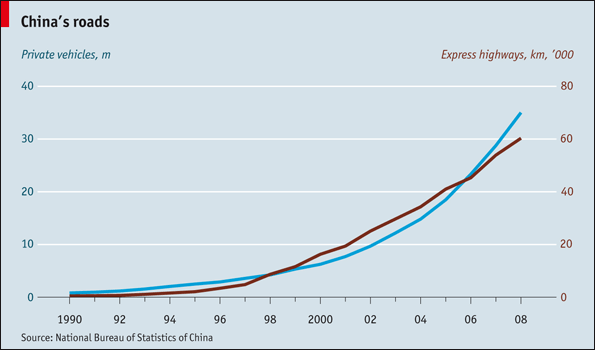
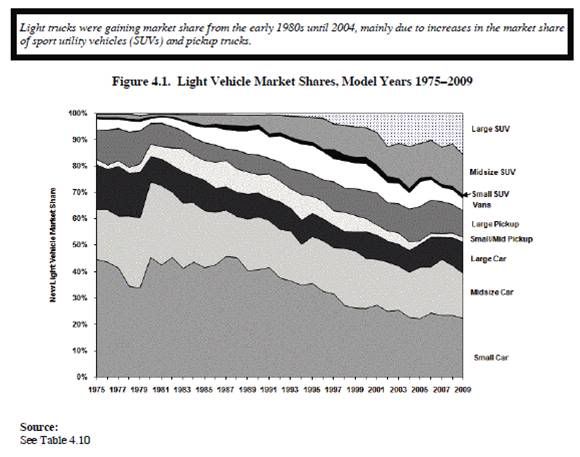
2010 was clearly an interesting year in terms of statistics. Declining graphs show up everywhere. Some certainly due to the economic crisis, others simply because resources start to peak. The Oil Drum has an interesting collection of graphs and statistics from 2010, some good ones are the decline in the predictions of oil reserves by the IAEA, their desperate attempt to talk away peak oil by inventing "unidentified sources" and "sources to be found" (and a funny cartoon on that), a hint on the presence of the plateau of oil production (a.k.a peak oil) in 2009/2010, a funny contradiction to diminishing oil reserves in more roadbuilding in China and the increased production of large versus small cars.
Furthermore: peak land and a breakup of population by energy source for food supply. Oh happy 2011...

2010 kann man als interessantes Jahr beschreiben wenn es um Statistiken geht. Der Trend den man überall sieht geht zu einer Gaußkurve, also am Ende nach unten. Einiges davon ist sicher der Wirtschaftskrise geschuldet, aber Resourcenknappheit spielt eine deutliche Rolle. "The Oil Drum" hat eine interessante Sammlung von Grafiken und Statistiken des letzten Jahres zusammengetragen. Dazu gehören die jährlich geringer eingeschätzten Ölreserven durch die IAEA. Natürlich kommt von dieser Seite aber gleich die Beruhigung, daß man sich da keine Sorgen zu machen braucht und schnell werden die Löcher in der Ölproduktion mit "unbekannten Quellen" oder "noch zu findenen Quellen" gefüllt. Dazu gibt es dann auch einen Comic. Allgemein sieht es doch eher so aus, als ob wir gerade mitten im Ölmaximum sind. Trotzdem entblöded sich die "zivilisierte" Menschheit nicht, mehr Straßen zu bauen und statt kleiner Autos immer größere zu bauen. WTF!
Nebenbei gibt es dann auch noch "peak land" und eine lustige Grafik dazu, von welchen fossilen Brennstoffen sich die Weltbevölkerung derzeit so ernährt. Na dann frohes neues Jahr!